The first Wild Atlantic Way sign I saw was outside the railway station in Westport. I had just arrived from Dublin with my bicycle. It was 14°C, heavily overcast, windy—and as I stopped to photograph the sign, it began to pour. Welcome to the Wild Atlantic Way. Ireland’s celebrated coastal route stretches more than 2,600 kilometers along the western edge of the island, from Derry in the north to Kinsale in the south. It is marketed primarily as a driving route, and most people experience it through a windshield: stop at a viewpoint, photograph a cliff, drive to the next village. On a bicycle, the Wild Atlantic Way becomes something else entirely. Distances matter. Hills matter. The direction of the wind matters enormously. Rain is no longer something happening outside. A village twenty kilometers ahead becomes important because it has a pub, a bowl of chowder, a bed and somewhere to dry your clothes. And gradually I realized that the Way in Wild Atlantic Way meant more to me than the road itself.
Into the Atlantic Weather
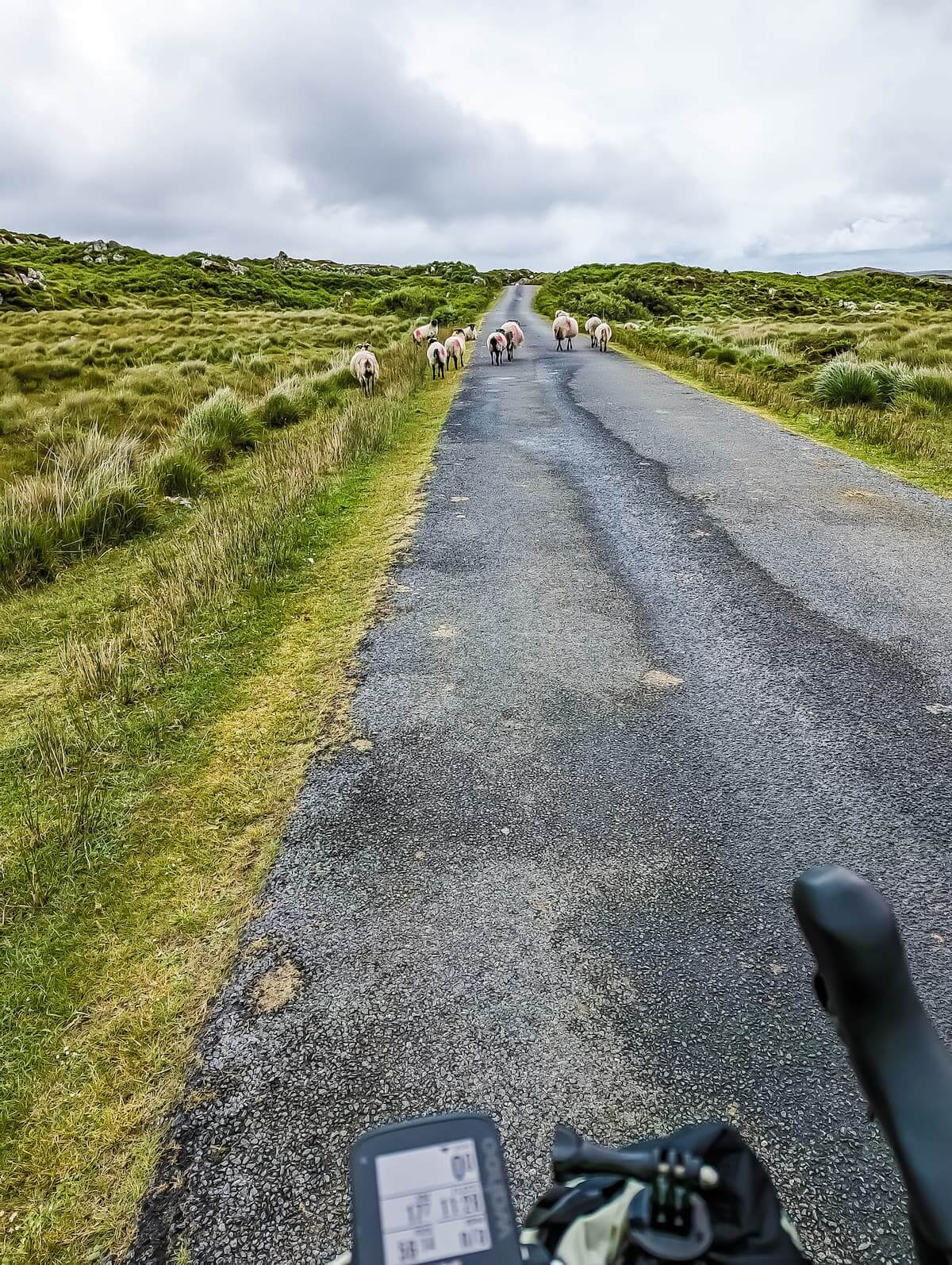
My introduction was not encouraging. From Westport I headed toward Achill Island along the Great Western Greenway, a wonderful 44-kilometer cycling trail built partly along the route of the old Westport–Achill railway. On a fine day, it must be delightful. Mine wasn’t. The temperature was in single digits when I went looking for coffee that morning. Rain persisted. Wind swept across open bog country where there was hardly a tree or shelter in sight. Sheep seemed to be my principal companions. By the time I crossed Achill Sound and continued through the bogs toward the northern part of the island, the romance of cycling Ireland’s Atlantic coast had temporarily disappeared. I had ridden less than sixty kilometers. It felt like suffering. The weather improved. Then deteriorated again. At one point, battling ferocious headwinds and sleet, drenched and chilled, I seriously contemplated abandoning the bicycle and renting a car. The idea was tempting. Inside a car, rain becomes scenery. You turn on the heater. If something looks interesting, you get out, take a photograph and retreat into warmth. A bicycle offers no such arrangement with the Atlantic. And perhaps that is precisely the point.
Achill: When the Clouds Lift
Then the weather changes, as weather does in Ireland. The clouds lift. A patch of blue appears. Suddenly the same landscape that had seemed bleak becomes magnificent. Achill Island spreads out in bogs, grasslands, mountains and enormous skies. Empty roads cross an interior where sheep vastly outnumber cyclists. Beaches appear below green slopes. Around Keel and Dooagh, the road climbs above the Atlantic before descending toward Keem Bay. This is the Ireland everyone imagines before coming. But after experiencing it in rain, the sunshine somehow feels earned. That became one of the recurring rhythms of the Wild Atlantic Way. The landscape is never entirely separate from the weather. Clouds race across it. Light transforms the sea. A headland disappears in mist and reappears an hour later. You stop hoping for perfect weather and begin accepting whatever Ireland decides to give you.
The Atlantic Is Always There
South from Westport, the route eventually took me through Doolough Valley toward Leenaun. This was another lesson in the difference between seeing a road on a map and experiencing it on a bicycle. The valleys and glacial landscapes of western Ireland can look serene in photographs. Put a strong southern wind through them and serenity disappears quickly. A cyclist becomes acutely conscious of geography. A valley funnels wind. A headland exposes you to it. A hill that barely registers to someone driving becomes the defining event of the next hour. Yet that physical intimacy with the landscape is also what makes bicycle travel so rewarding. You aren’t passing through the scenery. For better or worse, you are inside it.
And Then There Is the Pub
Eventually another rhythm asserted itself. Ride through rain. Fight the wind. Arrive somewhere wet. Find a pub. There is probably Guinness. There may be seafood chowder, potatoes, brown bread or something substantial enough to restore whatever the Atlantic removed during the day. And there are people. The Irish pub is such a familiar cliché that it is easy to underestimate what it means to a traveler on a bicycle. You haven’t driven in from a hotel. You arrive carrying the weather with you—wet jacket, damp shoes, cold hands, perhaps a slightly defeated expression. The pub becomes more than somewhere to drink. It is shelter, dining room, social center and, after a sufficiently miserable day, almost a form of salvation.
My original intention had been to camp along much of the Wild Atlantic Way. I carried the tent and camping equipment to do it. Ireland changed the plan. Pitching a tent in a gale is one thing. Waking every morning to wet equipment is another. Before long, B&Bs, hostels and rooms became considerably more attractive. That changed the journey too. Instead of disappearing into a tent at the end of each stage, I ended up in villages, pubs and restaurants. The weather that made camping miserable inadvertently pushed me deeper into Irish life.
Connemara: Space and Silence
Beyond Leenaun came Connemara. Here the landscape seems to expand. Mountains rise behind empty stretches of road. Bogs and lakes fill the spaces between scattered settlements. The Atlantic repeatedly intrudes into the land through bays, inlets and islands. The bicycle suits Connemara. Not because every road is easy—it isn’t—but because the pace feels appropriate. You notice isolated houses, stone walls, sheep, changing light and the enormous amount of open country between settlements. This is where rushing along the Wild Atlantic Way begins to seem particularly absurd. The route may be marked on maps and road signs, but the experience lies in the deviations, pauses and loops. I had a month. I still found reasons to linger.
County Clare and the Edge of the Land
Farther south, County Clare changes the landscape again. Around the Burren, green Ireland gives way to limestone. Cycling above Fanore, I reached a ridge where the coast suddenly opened into an extraordinary panorama—from the Aran Islands across Galway Bay toward Connemara. Then the road descended toward the sea and Black Head, where slabs of exposed limestone seemed to run directly into the Atlantic. This is one of the pleasures of following Ireland’s west coast slowly: the landscape refuses to remain consistent. Bog becomes mountain. Mountain becomes beach. Green pasture gives way to bare limestone. A quiet farm road suddenly reveals a horizon filled with ocean.
And then come the Cliffs of Moher. They are among Ireland’s most famous sights and hardly need another description. Yet arriving by bicycle changes even an iconic place. You have watched the cliffs approach. You have climbed toward them. You have felt the wind coming off the same ocean breaking against the rock below. The famous viewpoint is no longer an isolated destination. It belongs to the journey.
Loop Head: Ireland Without the Rush
South of the Cliffs of Moher, the crowds thin. Loop Head Peninsula became one of my favorite sections of the entire ride. This is the kind of place where the Wild Atlantic Way works especially well by bicycle. Roads become quieter. Villages smaller. The Atlantic seems closer. There is no need for a monumental attraction every ten kilometers. A lighthouse at the end of a peninsula, cliffs, a small harbor, stone walls, an empty road bending through fields—these are enough. Perhaps more than enough. By then I was no longer measuring the journey by how much distance I covered each day. Ireland had cured me of that.
Why I Chose Dingle
I had originally considered continuing farther south toward Cork and Kinsale. Instead, I chose the Dingle Peninsula. The neighboring Ring of Kerry is famous, but fame brings traffic, tour buses and cars. Dingle offered something quieter while sacrificing little in landscape. There was still one significant obstacle before reaching Dingle itself: Conor Pass. Again, this is where cycling turns geography into experience. A mountain pass isn’t a scenic stop. It is something you climb. You approach it slowly, watch the road rise ahead and earn the view one pedal stroke at a time. Then comes the descent—and the satisfaction of knowing that the landscape behind you was not simply visited. It was crossed.
Slea Head and the End of the Road
From Dingle I made the loop around Slea Head. It was one of the most impressive rides of the entire journey. The road runs above a rugged Atlantic shoreline, with green hills falling toward turquoise water. Around Dunmore Head, the Blasket Islands appear offshore. At Slea Head itself, Ireland seems to run out of land. There are cars here, certainly, and plenty of tourists. The road is narrow enough that a cyclist must remain alert. But bicycles have one great advantage. The views continually make you stop. You lean the bicycle against a wall. Walk a few steps. Look across the Atlantic. Ride another kilometer. Stop again. From high above the western end of the peninsula, the entire landscape—Slea Head, Dunquin, the Blasket Islands and the folds of green land running into the ocean—spreads below. There are worse places to realize a journey is nearing its end.
How Much of the Wild Atlantic Way Should You Cycle?
The complete Wild Atlantic Way is enormous. I didn’t ride all of it, nor do I think everyone should feel compelled to. My journey concentrated on roughly 1,100 kilometers of the route and associated loops between Achill Island and the Dingle Peninsula, through Mayo, Galway, Clare and Kerry. With additional riding, I covered considerably more. Someone interested primarily in distance could ride faster and farther. But I’m not convinced that would necessarily produce a better journey. If you have only a week, ride Achill. Or Connemara. Or County Clare. Or Dingle. The railway makes it possible to reach different sections from Dublin, and the route can be assembled around the time you actually have. The important thing is not to turn the Wild Atlantic Way into a cycling achievement measured solely in kilometers. Ireland resists schedules anyway. Weather intervenes. A place seduces you into staying another day. A pub becomes more interesting than whatever you intended to see that afternoon. Allow it to happen.
The Road Is Only Part of the Journey
By the end, I understood the Wild Atlantic Way differently from when I had photographed that first sign in the rain at Westport. Yes, there are soaring cliffs, glacial valleys, islands, beaches, bogs, stone walls and roads running beside one of the world’s great oceans. But those are only the visible parts. The Wild Atlantic Way I remember also contains horizontal rain, impossible headwinds, wet gloves, sheep, an unexpected patch of sunlight, a bowl of hot soup, a Guinness poured at the end of a cold day and conversations that happen because you needed somewhere to get warm. Had I traveled by car, I would undoubtedly have seen more. I suspect I would have experienced less. On a bicycle, Ireland doesn’t remain safely outside the window. The Atlantic reaches you. The weather determines your mood and your progress. Villages become destinations rather than names on road signs. A pub becomes part of the geography. Eventually even the rain becomes part of the memory. Ireland rewards patience. Its beauty unfolds slowly. And perhaps that is the real meaning of cycling the Wild Atlantic Way.
The road shows you Ireland’s Atlantic coast.
Everything that happens along it reveals Ireland.
Planning to ride part of the route yourself? My downloadable Cycling the Wild Atlantic Way guide follows the journey from Achill Island to the Dingle Peninsula with detailed stages, route planning, accommodations and practical information.