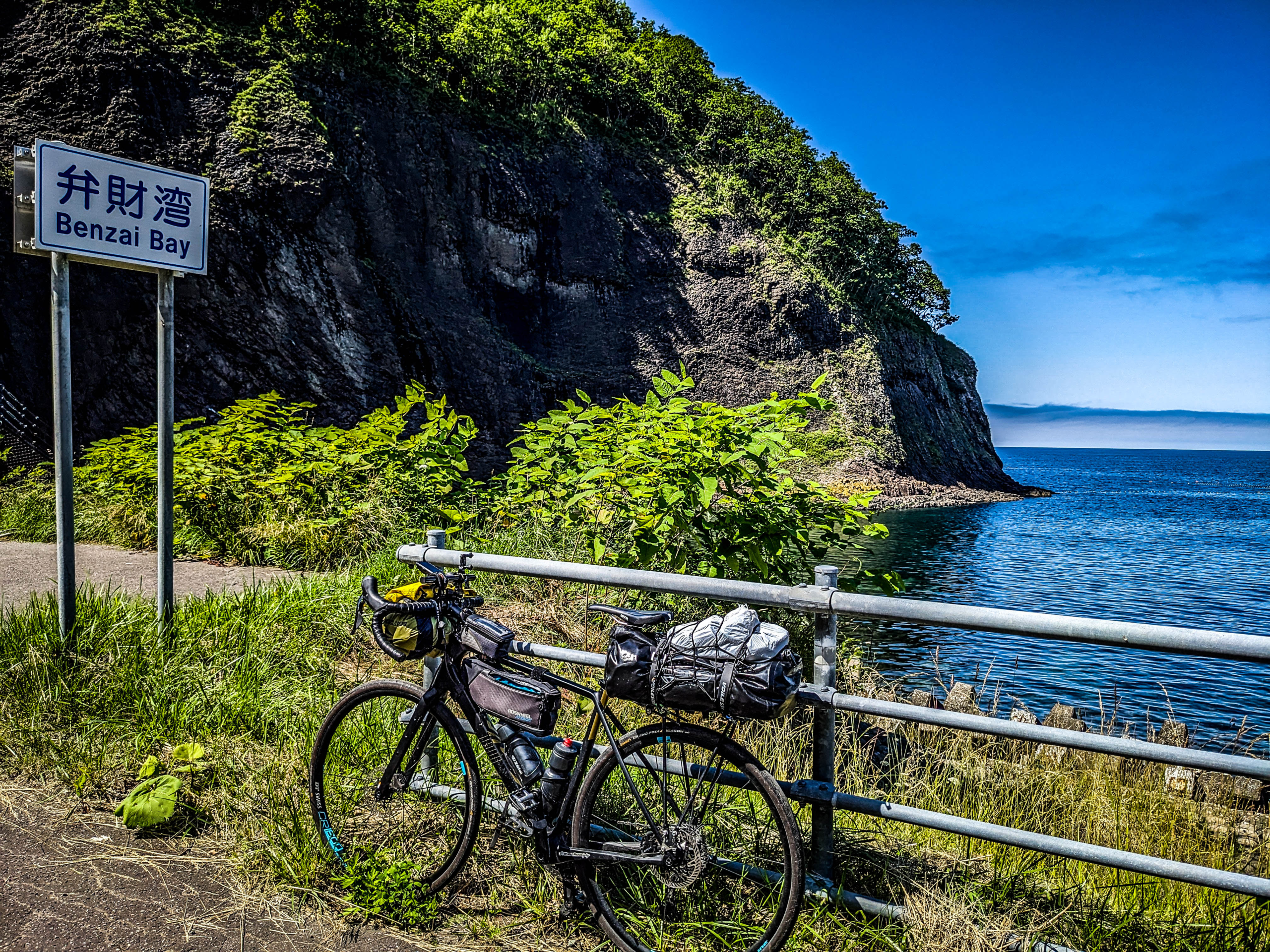
There are years when planning a journey to Japan feels almost timeless. The questions tend to be familiar: when to go for cherry blossoms, how to avoid the crowds in Kyoto, whether to ride north into Hokkaido or follow the old roads of Honshu.
And then there are years like this one.
The world beyond Japan has become less predictable—conflict in the Middle East, shifting energy markets, rising interest rates closer to home. Japan, for all its internal stability, does not exist in isolation. It is a country deeply dependent on imported energy, particularly oil and gas. When supply chains tighten or prices spike, the effects ripple quietly through daily life—into transportation costs, accommodation pricing, and even the rhythm of travel itself.
Yet what is striking, and worth understanding clearly, is this: Japan absorbs external shocks differently than most destinations. The changes are real, but rarely abrupt. For a traveler—especially one moving through the country by bicycle—they tend to register not as disruption, but as subtle shifts in cost, density, and experience.
A Weak Yen, Strong Demand—and What That Means on the Ground
Over the past year, Japan has occupied a curious position. On one hand, the yen has remained relatively weak, making the country more accessible to foreign visitors than it has been in decades. On the other, demand has surged—tourism returning in force, particularly along the well-worn corridors of Tokyo, Kyoto, and the Fuji region.
Layer onto this the Bank of Japan’s gradual move away from ultra-low interest rates, and you begin to see a more complex picture forming.
For the traveler, the result is not contradiction, but compression:
- Accommodation in high-demand areas is rising—not dramatically, but steadily
- Domestic transport (rail, buses) edges upward with energy costs
- Everyday expenses remain reasonable, but no longer feel “exceptionally cheap”
If you are planning cycling Japan this year, the implication is simple:
the margin for improvisation is narrowing in the busiest places, while remaining wide open elsewhere.
The Geography of Crowds Has Tightened
Japan has always had crowded places. What has changed is how tightly those crowds are concentrated.
Kyoto remains Kyoto. The approach to Fushimi Inari Taisha will still fill by mid-morning. The lanes of Higashiyama will still carry that slow-moving current of visitors. Tokyo’s major districts—Shibuya, Asakusa—continue to absorb enormous volumes of foot traffic.
But step away, even slightly, and the contrast is immediate.
This is where the distinction between tourism in Japan and travel in Japan becomes more relevant than ever.
- The Nakasendo corridor, even in its more visited sections, still offers long stretches of quiet between the restored post towns
- The inland valleys beyond the main routes—where roads follow rivers rather than rail lines—remain largely untouched
- Regions like Shikoku, which I will return to later this year, sit in that rare space between accessibility and obscurity
For those interested in quiet Japan travel, this year does not close doors—it simply clarifies where those doors are.
Cycling Japan in a Year Like This
For a cyclist, the current moment presents an unusual advantage.
Japan’s dependence on imported energy may push costs upward in transport-heavy travel—rail passes, long-distance buses—but the bicycle operates outside much of that system. What changes instead is the context in which you ride.
Urban riding—Tokyo in particular—feels denser than before. More visitors, more delivery traffic, more movement compressed into the same streets. The stop-start rhythm along major arteries has not changed, but the volume has.
Yet once beyond those urban belts, the experience reverts to something far more stable—almost unaffected by global currents.
- River paths such as those along the Arakawa still offer uninterrupted movement out of the city
- Secondary roads, even when paralleling National Routes, carry remarkably little traffic
- Rural Japan continues to operate at its own pace, largely indifferent to global fluctuations
This is why Japan cycling routes remain one of the most reliable ways to experience the country—not just scenically, but economically and logistically.
Energy, Prices, and the Subtle Cost of Movement
It would be misleading to say that global events have no impact. They do—but in Japan, the effect is often indirect.
Higher energy costs filter into:
- Train fares and occasional service adjustments
- Accommodation pricing in high-demand zones
- Food imports, though less noticeably given Japan’s strong domestic supply chains
What you are unlikely to encounter are sudden, disruptive price swings or shortages. Japan’s systems are built to buffer precisely this kind of volatility.
For planning purposes, it means:
- Booking accommodation in major cities earlier than you might have a year ago
- Remaining flexible in less-traveled regions, where availability is rarely an issue
- Understanding that costs are trending upward—but from a historically moderate base
Where to Go This Year (and Why It Matters More Than Usual)
If there is a single takeaway for this year, it is this:
Your choice of where to go in Japan now carries more weight than before.
Not because the country has changed dramatically—but because the gap between crowded and uncrowded, expensive and reasonable, compressed and expansive, has widened.
- If you follow the classic route—Tokyo to Kyoto to Osaka—you will feel the pressure of global tourism returning at scale
- If you step even slightly off that line, the experience opens immediately
- If you design your journey around movement rather than destinations—as cycling naturally does—you regain control over both cost and experience
This is where your planning intersects directly with Japanese culture itself: the appreciation of rhythm, timing, and space.
Japan rewards those who move with awareness—of when to arrive, when to leave, and when to take the road that is not the obvious one.
Looking Ahead
I will return to Japan later this year, riding across Shikoku—an island that, by all indications, still sits outside the main currents of international tourism. It is precisely in places like this that the balance Japan offers becomes most apparent: accessible, structured, yet quietly removed.
In the meantime, whether you are planning your first journey or returning—as many do—you are not stepping into a country in flux, but into one that is absorbing change while remaining fundamentally itself.
And perhaps that is the most useful perspective to carry.
Not whether to go to Japan now—but how to go.
Because in a year shaped by global uncertainty, Japan remains one of the few places where, once you are on the road—especially on a bicycle—the world feels, once again, remarkably steady.