Most people think of travel as a break from everyday life.
A vacation. A reward after months of work. A collection of photographs, memorable meals, famous landmarks, and souvenirs to bring home.
Sometimes it is exactly that.
But now and then, a journey becomes something entirely different.
People return home and resign from jobs they once believed they wanted. They end relationships that had quietly run their course. They move to another country, start a business, return to university, write a book, or simply begin living more honestly.
It is tempting to say that travel changed them.
Yet perhaps the journey did not change them at all.
Perhaps it simply revealed the person they had been becoming all along.
Travel has a remarkable ability to interrupt routines. At home, we live within patterns so familiar that we rarely notice them. The same streets. The same conversations. The same obligations. We mistake habit for necessity.
Our lives feel inevitable.
Then we travel.
Suddenly, nothing is familiar. We cannot rely on instinct. We must observe. Listen. Adapt. Even ordering breakfast or finding the right bus requires attention.
The mind wakes up.
More importantly, we compare.
Not consciously at first.
We see people living differently. Cities organized around entirely different priorities. Families eating together late into the evening. Elderly people remaining active. Children walking to school independently. Small villages where strangers still greet one another. Countries where success is measured by something other than income.
None of these observations suggest a better way of living.
But they prove something essential.
There is more than one way to build a life.
That realization can be profoundly unsettling.
Many of the decisions we considered permanent suddenly appear to have been choices all along.
The career.
The place we live.
The relationships we maintain.
The ambitions we inherited from others rather than discovered ourselves.
Travel quietly asks uncomfortable questions.
If people can live differently here, why couldn’t I?
It does not provide answers.
It simply makes the questions impossible to ignore.
That may explain why some of history’s greatest transformations began with journeys.
Pilgrims walked across continents in search of faith.
Artists left home seeking inspiration.
Scientists traveled to observe unfamiliar worlds.
Explorers crossed oceans not only to discover new lands but often to discover themselves.
The physical journey became an inner one.
Modern travel still carries that possibility, although it is increasingly easy to avoid it.
Today’s traveler can move halfway around the world while remaining psychologically at home—checking familiar news, eating familiar food, speaking only with companions, documenting every moment for social media before fully experiencing it.
Distance alone changes very little.
Presence changes everything.
The journeys that leave the deepest mark are rarely the most luxurious.
They are the ones where uncertainty enters the picture.
Where plans fall apart.
Where language becomes a barrier.
Where weather changes.
Where strangers help.
Where we become less concerned with controlling the experience and more willing to take part in it.
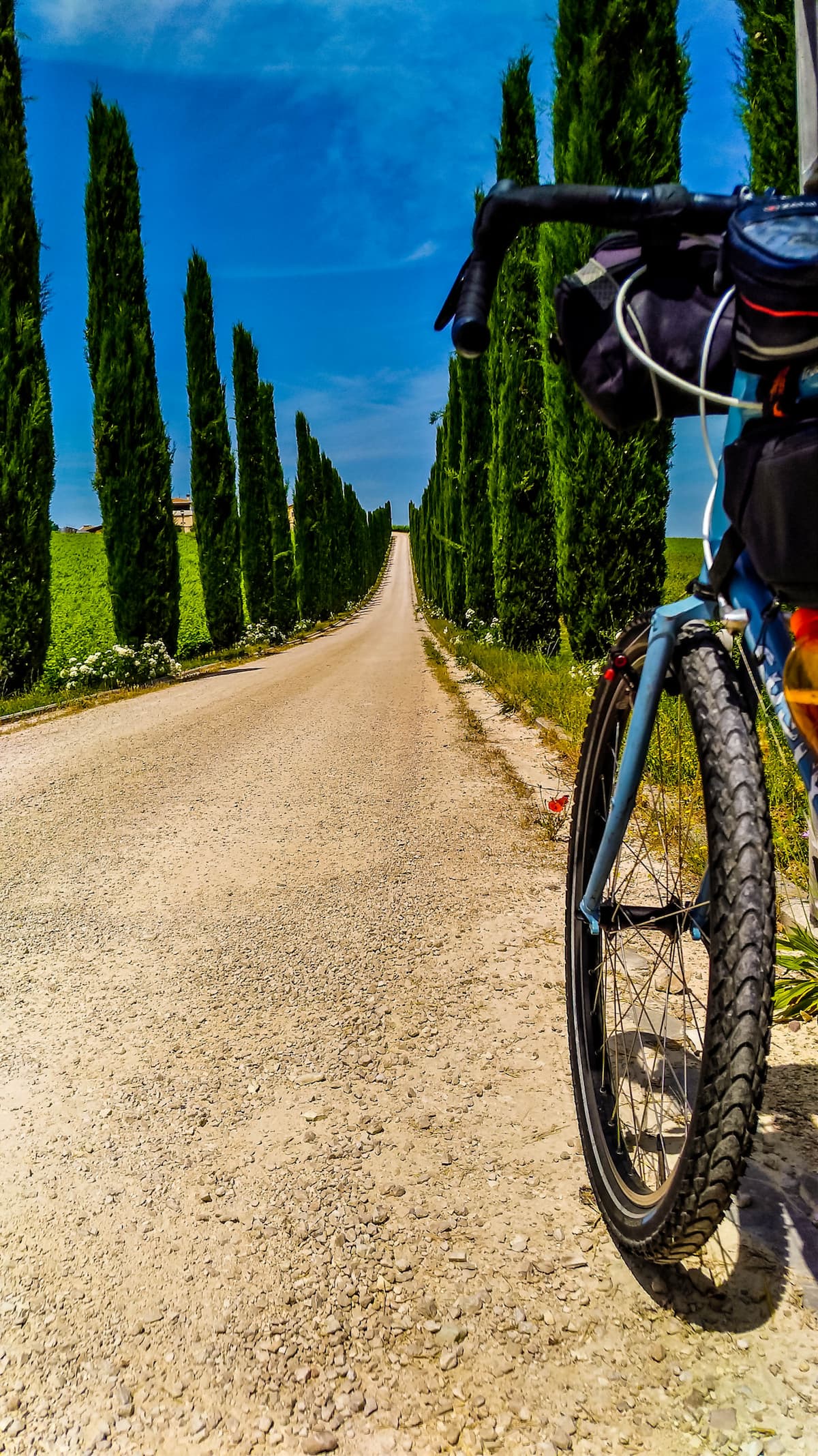
That is one reason I have always preferred traveling by bicycle.
A bicycle moves at a human pace.
Fast enough to cross a country.
Slow enough to notice the smell of a forest after rain, hear conversations drifting from village cafes, or stop because an old temple, a curious market, or a quiet river simply deserves a closer look.
The world unfolds gradually instead of rushing past a train window.
Each day becomes a conversation with the landscape.
Each evening feels earned.
Over the years, I have met many travelers who returned home carrying something invisible.
Not souvenirs.
Perspective.
Confidence.
A different understanding of what matters.
Some changed careers.
Some changed countries.
Some changed almost nothing outwardly, yet began living with greater purpose.
The journey itself was only a few weeks long .
Its influence lasted decades.
Looking back on my life, I can see that several journeys divided it into chapters.
Some were planned.
Others began almost by accident.
Each one quietly altered the direction that followed.
The roads themselves have long since disappeared behind me.
The decisions they inspired never did.
Perhaps that is the greatest gift travel offers.
Not the places we visit.
Not even the memories we collect.
But the possibility of returning home, seeing our own lives with fresh eyes.
Sometimes the greatest distance we travel is not measured in kilometers.
It is measured in the person we become before we finally arrive home.