Returning to Vietnam
Last month I returned to Vietnam after nearly three decades away.
The reason for the trip was deeply personal. My son—now twenty-eight—was getting married in Cần Thơ, in the heart of the Mekong Delta.
Standing there for the ceremony, I could not help thinking back to the first time I entered Vietnam over thirty-five years earlier, when the country had only just begun opening to foreign travelers.
The Vietnam I encountered felt like a place cautiously stepping out of history.
Today it feels like a country racing confidently toward the future.
When Vietnam Reopened to Travelers
In 1990–1991 I was traveling in Nepal when Vietnam first announced it would begin allowing travelers again. For years the country had been largely closed to the outside world after the Vietnam War ended in April 1975, when the last American helicopter lifted off the rooftop of the U.S. Embassy in Saigon.
Meanwhile, a remarkable transformation was unfolding next door in Cambodia.
The United Nations Transitional Authority in Cambodia (UNTAC) arrived in Phnom Penh first in 1991 and then in greater numbers in 1992, launching one of the largest peacekeeping operations the United Nations had ever attempted. Nearly twenty thousand personnel came to administer the country and organize democratic elections after years of war and a decade under the brutal Khmer Rouge regime.
The news I heard spoke of Phnom Penh as an unlikely frontier city again—chaotic, fascinating, and suddenly full of international life.
So with the possibility of visiting Cambodia and perhaps also getting a visa for Vietnam, I went.
Fried Grasshoppers at the Cambodia Border
Crossing into Vietnam from Cambodia was unforgettable.
It took an entire day to get through the border formalities. While waiting, I wandered around the nearby stalls where local vendors were selling fried grasshoppers and worms—crispy snacks that seemed perfectly normal to everyone else standing there.
Eventually, I crossed into Vietnam and began traveling eastward along the Mekong River toward the delta.
What struck me most was the absence of foreigners.
There were no tourists anywhere.
Villages appeared slowly along the riverbanks, and daily life unfolded in rhythms that seemed unchanged for generations.
Saigon in the Early 1990s
When I finally reached Saigon, the atmosphere felt very different from the countryside.
Cyclo drivers filled the streets. Many had once worked with Americans during the war and spoke some English, making conversation easy.
Saigon felt open and friendly.
Hanoi, at that time, was another story. People rarely made eye contact with foreigners, and the atmosphere was noticeably more cautious.
Saigon had a different energy altogether.
Marriage, Motorbikes, and Life in Vietnam
Five years later, I was still living in Saigon.
Remaining in Vietnam was not simple. Foreign residents had to leave the country frequently to renew their visas, which meant periodic trips to Phnom Penh, Vientiane, or Bangkok.
But by then my life had become rooted there.
I married a Vietnamese woman.
Leaving Vietnam with her was difficult because the local authorities were reluctant to issue her a passport. Some of her relatives had worked with the South Vietnamese army and Americans during the war, and that family history complicated matters.
So we stayed.
During those years I traveled widely throughout Vietnam, especially in the south.
Ferries, Snakes, and the Long Road to Cà Mau
One journey through the Mekong Delta remains unforgettable.
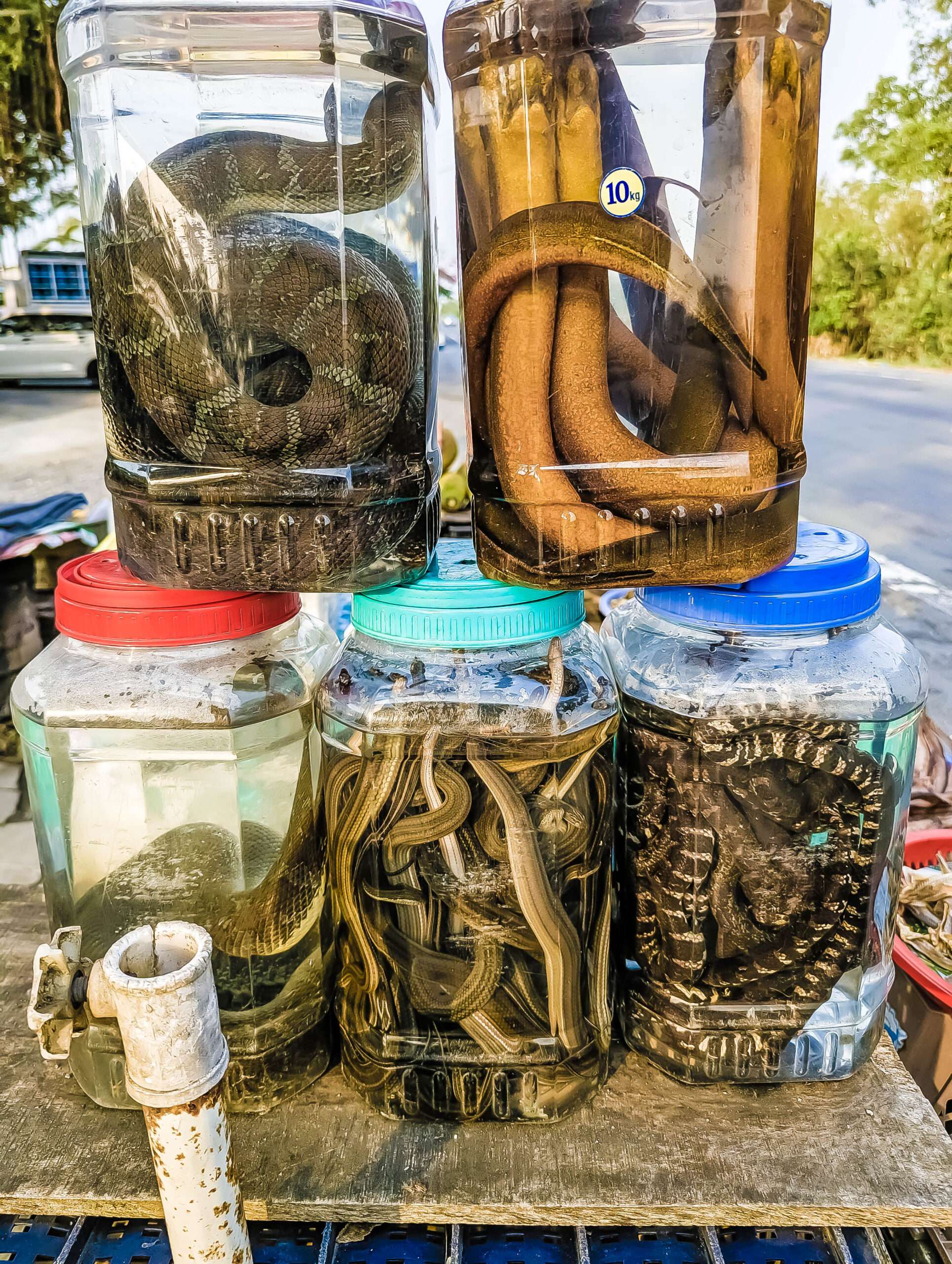
My wife and I rode a small Honda motorbike south to Cà Mau, the southernmost tip of Vietnam, to visit her brother. At our departure, he gave us a burlap sack of fish to deliver as a gift to another brother in Cần Thơ.
My wife drove the motorcycle. I sat behind her, holding the sack. After a while, I felt something moving inside.
“Some of the fish are still alive,” I told her.
She laughed. “No fish,” she replied. “Snakes.”
Only later did she casually mention that some of them were poisonous.
The snake was considered a delicacy.
For the rest of the ride, I held that sack a little more carefully.
Travel in the Mekong Delta in the 1990s was slow and unpredictable. Crossing the wide branches of the Mekong required ferries—often overcrowded boats packed with motorbikes, bicycles, and passengers.
Reaching Cà Mau could take days.
Life in the delta was pastoral and demanding. It was not romantic, but it was authentic—people working hard along the waterways simply to make a living.
Vietnam Today
Returning to Vietnam in 2026 felt like stepping into a completely different country.
Modern bridges now span the Mekong in many places—large suspension structures that would not look out of place beside the Golden Gate Bridge.
Where ferries once crept slowly across the river, highways now soar overhead.
A four-lane expressway connects Ho Chi Minh City—the official name for Saigon since 1976—to Cần Thơ.
What once required a full day of travel can now be completed in about ninety minutes.
Along the highway stand large gas stations, cafés, and modern roadside stops.
The transformation is astonishing.
From Quiet Streets to Pham Ngu Lao
Saigon itself has changed dramatically.
By the late 1990s, tourism had already grown, but the backpacker district around Pham Ngu Lao Street was still modest.
Today the streets are packed with travelers, tour buses, restaurants, massage parlors, and neon lights.
Walking through the area again after so many years, I could hardly recognize it.
The quiet city I first encountered in the early 1990s had become a global tourism hub.
My Son’s Wedding in Can Tho
Vietnam is also where my son was born.
For a long time, I feared we might never leave the country together. The passport situation my wife faced seemed impossible to solve – she just simply could not get a passport; the authorities kept repeatedly denying to issue her the passport.
But when our son was born—an American citizen through me—the authorities finally relented.
In 1999, the three of us left Vietnam and traveled to my home in Colorado at last. Our son was just over a year old.
27 years later, he returned to Vietnam on his own journey. And last month he married in Cần Thơ, in the Mekong Delta.
Standing there for the ceremony, watching him begin a new chapter of his life, I recalled a motorcycle trip my wife and I made to the minority areas in the north on a brief vacation when she was pregnant with our son; this time I drove and she sat behind me. And now, almost 30 years later, he got married here. I realized how deeply Vietnam had become part of our family’s story.
Cycling Southeast Asia
Over the years, Southeast Asia became one of my favorite regions to explore.
Since the 1970s, I have traveled widely across Thailand, Burma (now Myanmar), Indonesia, Malaysia, the Philippines, and finally Vietnam and Cambodia.
A select few journeys across the region inspired several of my cycling guides:
Each journey revealed new landscapes, cultures, and stories.
How Places Change—and Why We Return
Vietnam today is vastly different from the country I first encountered over three decades ago.
Bridges span rivers that once required slow ferries.
Highways connect cities that once took days to reach.
Tourists now fill streets that were once almost empty.
Yet despite all those changes, the memories of those first journeys remain vivid—the quiet villages along the Mekong, the slow ferries crossing the river, and even the sack of snakes bouncing on the back of a motorbike.
Places change.
Roads improve.
Cities grow.
But the memories of the journeys that first brought us there stay with us forever.