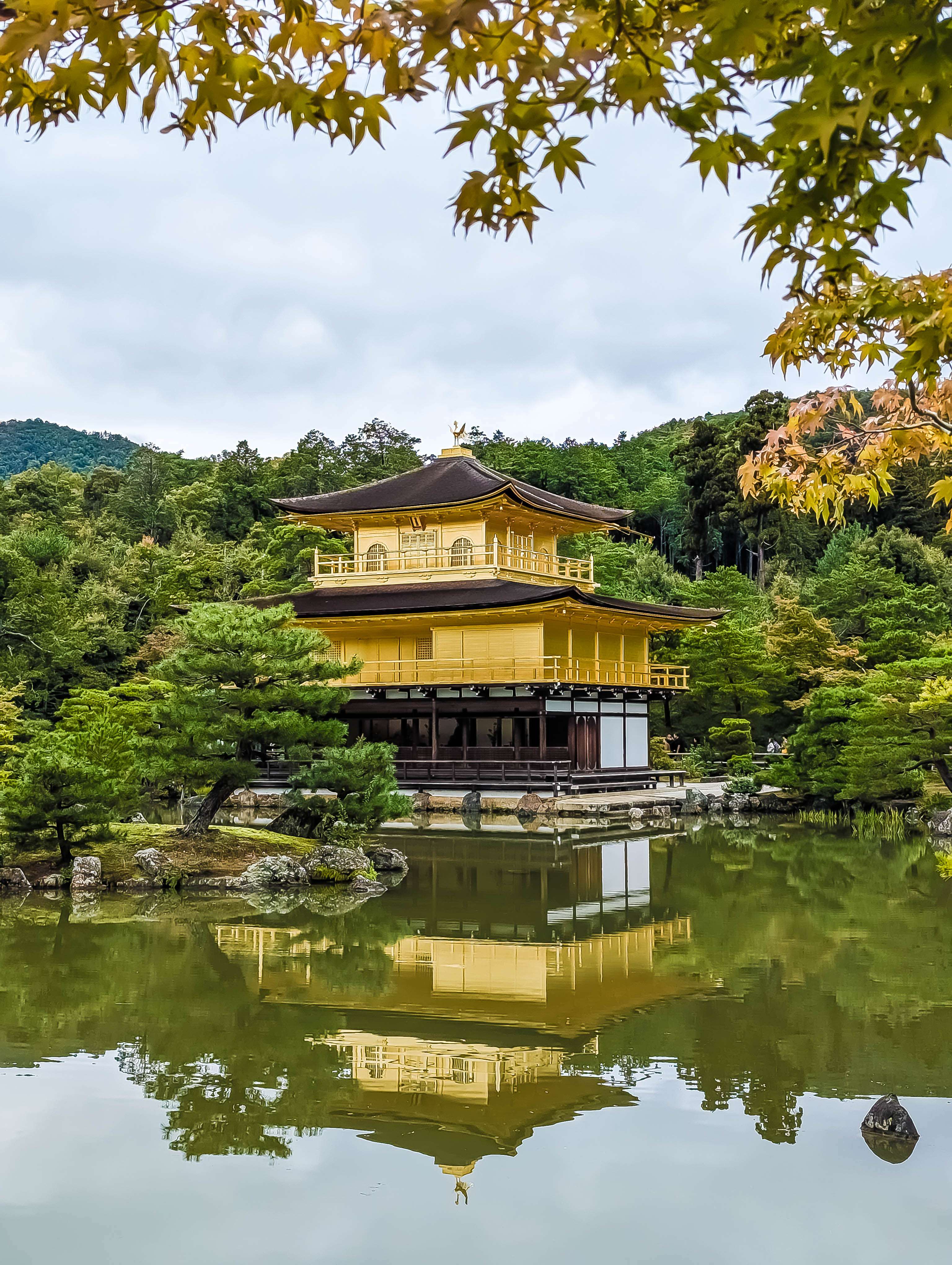
With over 1,600 temples and countless shrines, Kyoto presents visitors with a paradox: abundance so great it can overwhelm. Guidebooks, itineraries, and social media feeds often frame the city as a checklist—golden pavilion, silver pavilion, bamboo grove, torii gates—implying that the goal is coverage rather than experience.
It isn’t.
Temple-hopping in Kyoto is less about ticking off sites than about learning how to move through the city. The most rewarding visits rarely come from chasing highlights back-to-back. They come from spacing, from walking between places, from letting the city’s rhythm dictate the day.
Some temples announce themselves loudly—Kiyomizu-dera perched above the city, or Kinkaku-ji gleaming across a pond. Others reveal themselves quietly, half hidden behind residential streets or at the end of a short uphill path. A small sub-temple, a shaded pond, a worn stone threshold may linger longer in memory than the most photographed landmark.
What matters is not how many temples you see, but how you approach them.
Walking helps. So does cycling. Moving at a human pace allows for transitions: a canal path between temples, a residential lane where laundry hangs out to dry, a pause at a convenience store before climbing another set of steps. These in-between moments soften the impact of crowds and give context to what you’re seeing.
It also helps to accept that some days will be shaped by weather or congestion rather than intention. Rain can thin crowds and sharpen colors. Crowds, when unavoidable, can prompt you to move on sooner than planned. Neither is a failure. Kyoto rewards flexibility.
During my time in Kyoto, I resisted the urge to chase completeness. I left some major temples for later days, skipped others entirely, and returned to certain areas more than once. The city does not reveal itself all at once. It accumulates slowly, through repetition and restraint.
Temple-hopping, in this sense, becomes less about religion or architecture alone and more about attention—how long you stay, when you leave, and what you notice along the way.
For travelers planning their first visit to Japan, Kyoto is often the emotional center of the journey. The temptation is to do too much. The wiser approach is to do less, more deliberately. Kyoto does not ask to be conquered. It asks to be walked.
(For a different—but equally revealing—aspect of Kyoto’s living culture, see my earlier post on kimono-clad Japanese tourists strolling the temple districts, and for a longer journey that places Kyoto in context, my book Cycling the Old Roads of Japan traces how travelers once reached the city along the Nakasendō and Tōkaidō.)