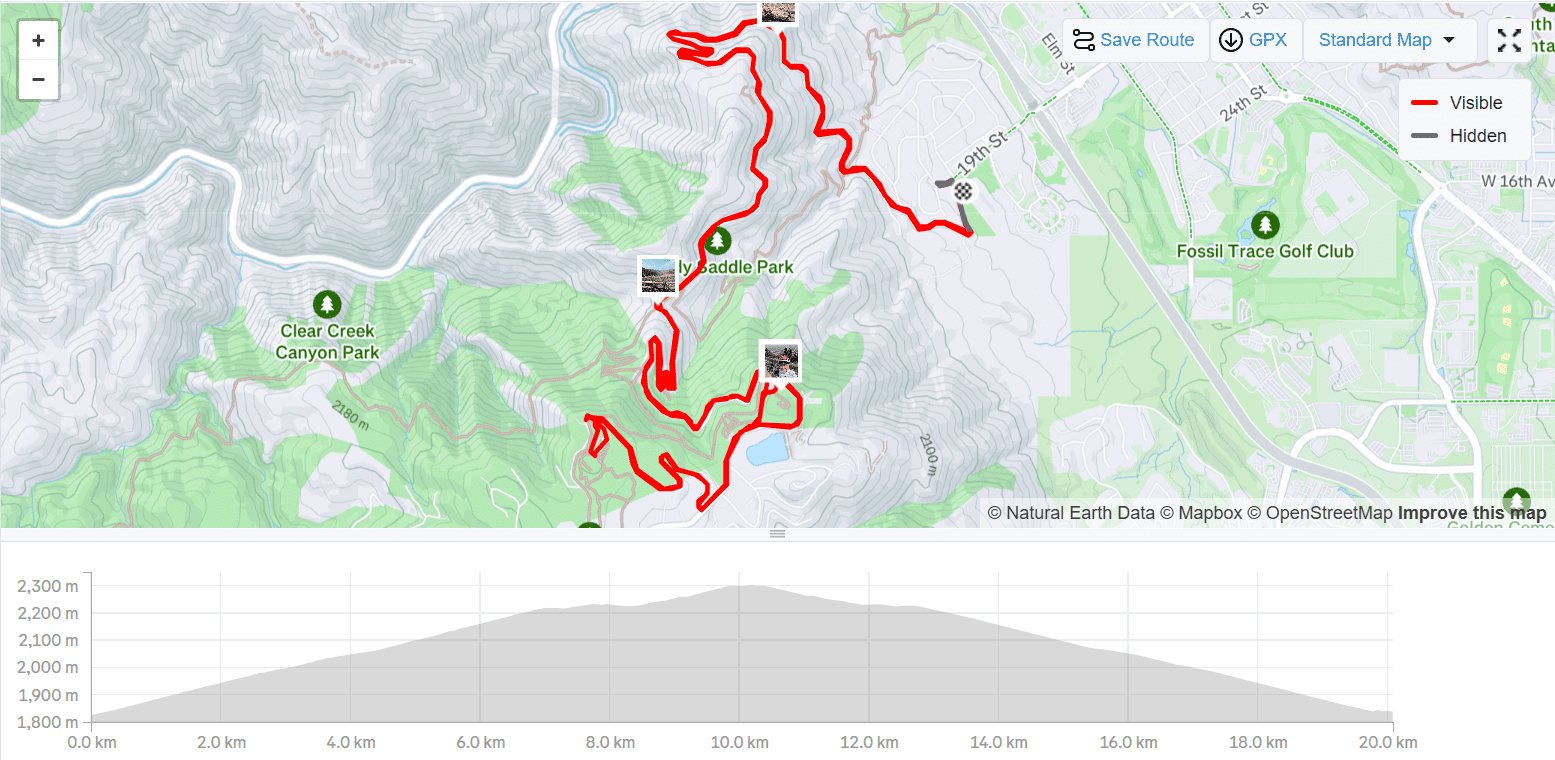
For cyclists, mountains are more than just roads carved into rock; they’re tests of grit, beauty, and sometimes survival. Two climbs that capture very different aspects of the sport are Lookout Mountain, just outside Denver, Colorado, and the legendary Mont Ventoux, in Provence, France. At first glance, they couldn’t be more different—one is a beloved local training climb, the other a mythic giant of the Tour de France—but together, they highlight the spectrum of what mountain cycling can be.
The Numbers: Stats That Tell a Story
Lookout Mountain (Golden, Colorado)
- Length: if you ride to the Nature Center further up the mountain, it will become a 10km one-way ride; less so, ~4.6 miles (7.4 km) if you ride only to the lookout at Buffalo Bill’s Grave, the usual destination for most.
- Elevation gain: ~1,624 ft (495 m)
- Average gradient: ~5.3%
- Max gradient: ~8-8.9%
- Summit elevation: ~7550 ft (2,301 m)
Mont Ventoux (Bédoin side, Provence, France)
- Length: ~13.5 miles (21.5 km)
- Elevation gain: ~5,300 ft (1,610 m)
- Average gradient: ~7.5%
- Max gradient: ~11–12%
- Summit elevation: ~6,273 ft (1,912 m)
From the numbers alone, the contrast is clear. Lookout is short, accessible, and perfect for repeats. Ventoux, by comparison, is a relentless grind—twice as long, with gradients that feel punishing rather than playful.
Atmosphere: Local Playground vs. Mythic Arena
Lookout Mountain is the quintessential training climb. If you live in or around Denver, chances are you’ve done it dozens—if not hundreds—of times. It’s approachable, scenic, and offers just enough challenge to build fitness. The climb is woven into the cycling community’s culture: group rides, hill repeats, time trials. At the top, riders often loop back down for another go. It’s less about conquering and more about consistency.
Mont Ventoux, on the other hand, is a pilgrimage. Known as the “Giant of Provence,” it looms over the Rhône Valley, stark and bare at its summit, with lunar-like rock fields that seem almost extraterrestrial. Every serious cyclist dreams of it. Ventoux is where legends are made and sometimes broken—Tom Simpson’s tragic death in 1967 remains part of its lore. For amateurs, climbing it is not just exercise; it’s a rite of passage.
The Experience of the Ride
On Lookout Mountain, the gradients are friendly; the switchbacks are well-paced, and the view down into Golden and across to Denver makes the effort feel rewarding. You’ll encounter plenty of other cyclists, plus a fair share of cars and motorcycles, but the road is wide enough to manage. It’s the kind of climb where you can push hard for a PR one day and spin easy recovery the next.
On Ventoux, the ride is something else entirely. Starting from Bédoin, the first 6 km lull you into a rhythm before the forest section begins—a dark, suffocating stretch of near-constant 9–10% gradients for about 10 km. It’s a test of pacing and mental toughness. Emerging from the trees into the barren, white scree fields, you’re hit by the wind—the mountain’s namesake, Ventoux (“windy”). Gusts can turn the final 6 km into pure survival mode. The radio tower at the summit becomes a beacon you crawl toward.
Accessibility vs. Challenge
Lookout Mountain shines as a training climb precisely because it’s manageable. You can fit it into a weekday ride after work or combine it with other Front Range climbs for a big day out. It’s accessible year-round, weather permitting, and doesn’t demand months of preparation.
Ventoux, however, is a destination climb. You don’t casually ride Ventoux after work—it requires planning, fitness, and a bit of respect. For most cyclists, it’s part of a dream trip to Europe, often combined with rides through Provence’s vineyards and lavender fields. The climb itself demands endurance, strategy, and the ability to suffer gracefully.
Why Both Matter
Comparing Lookout Mountain to Mont Ventoux might seem unfair, but each plays an important role in cycling culture. Lookout represents the climbs we do most often—the steady friends that keep us fit and sharp. Ventoux represents the climbs we dream about—the ones that define our relationship with the sport, even if we only ride them once.
For Colorado locals, Lookout is where you sharpen the blade. For cyclists worldwide, Ventoux is where you test whether the blade can cut through the myth, the wind, and the suffering.
Final Thoughts
If you’re lucky enough to live near Denver, Lookout Mountain should be part of your weekly rotation. If you ever find yourself in Provence, Mont Ventoux should be on your bucket list. They’re not the same kind of climb, but together they remind us why we ride: for fitness, for challenge, for beauty, and sometimes to brush shoulders with legends.