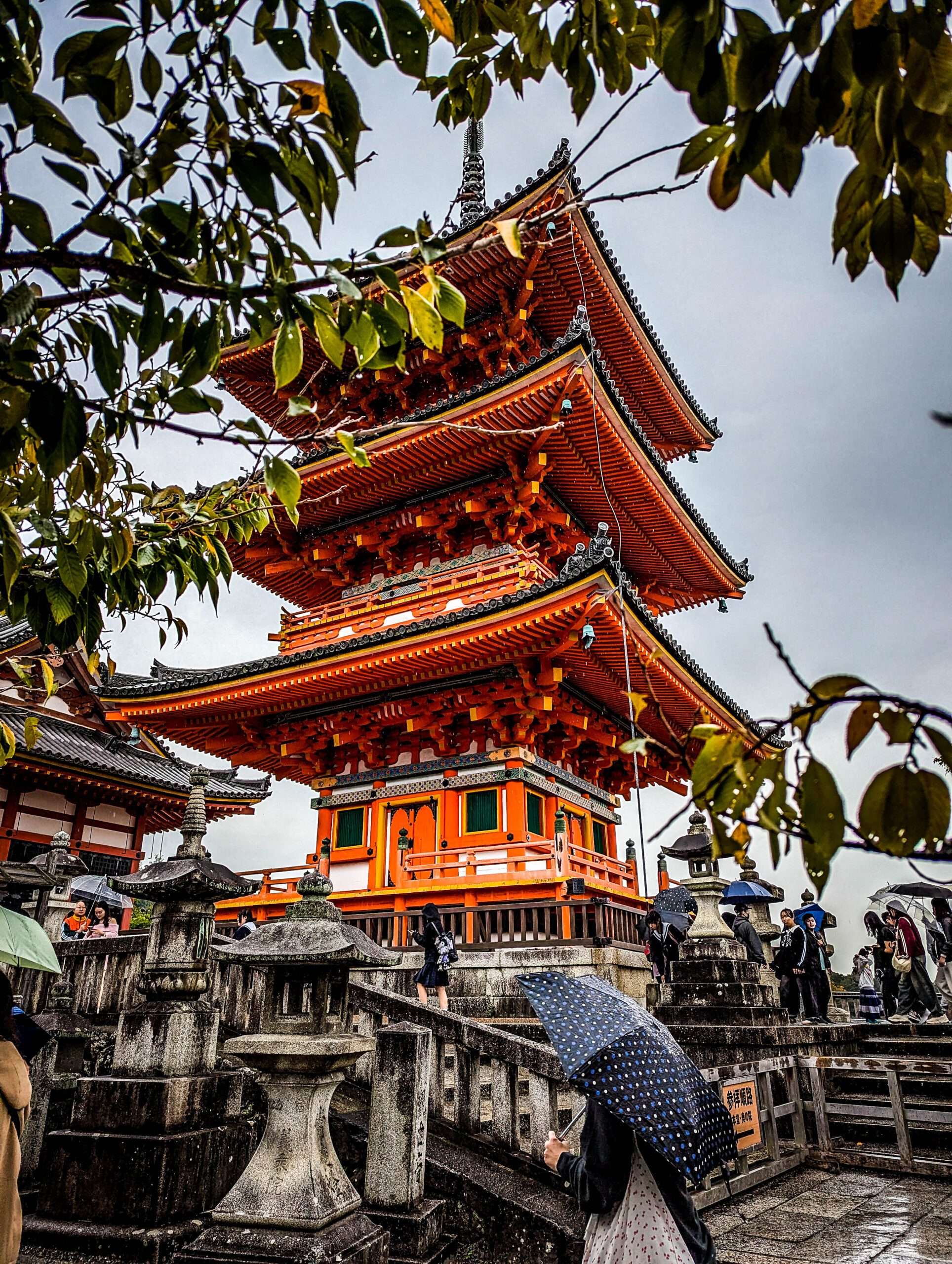
Few cities reward patience as much as Kyoto—and few punish poor timing more ruthlessly.
For many first-time visitors, Kyoto is imagined as a place of quiet temple courtyards, moss gardens, and contemplative walks. That version of Kyoto still exists. But it exists at specific times, in specific places, and often only briefly before the crowds arrive.
The reality is that Kyoto has become one of the most heavily visited cultural destinations in the world. Buses unload in waves. Narrow streets clog. Temple approaches turn into slow-moving rivers of people. Nowhere is this more apparent than around Kiyomizu-dera, Gion (featured image), and the Arashiyama bamboo grove.
Timing Is Everything
The single most important rule in Kyoto is simple: arrive early.
Temples that feel serene at 8:00 a.m. can feel unbearable by 10:30. By noon, many sites are no longer about contemplation at all, but crowd management. Early mornings—especially on weekdays—are when Kyoto still feels like itself.
Late afternoons can also work, particularly in winter or on rainy days, when tour groups thin out. Rain, inconvenient as it may be, is often an ally in Kyoto. Wet stone, subdued colors, and fewer visitors can transform an experience entirely.
Choose Areas, Not Checklists
Trying to “see everything” in Kyoto is a guaranteed way to exhaust yourself. Instead, choose one area per day and move through it slowly. Walk between temples rather than hopping between them by bus or taxi. The transitions—the canals, residential lanes, and small shrines—often linger longer in memory than the headline sites.
Some days, that may mean seeing only one or two temples. That’s not failure. That’s how Kyoto works.
Accept That Some Places Are Better Passed By
Not every famous site needs to be lingered over. Sometimes the most rational decision is to arrive, observe the crowd, take in the context, and move on. This isn’t cynicism—it’s discernment.
During my own time in Kyoto, I deliberately left certain major temples for different days, skipped others entirely, and returned to a few areas more than once. Kyoto is not meant to be consumed in a single sweep.
If you’re interested in how Kyoto fits into a longer journey across Japan—historically and practically—I explore this in depth in my book Cycling the Old Roads of Japan, which places the city in context along the Nakasendō and Tōkaidō routes.
Kyoto rewards those who slow down, arrive early, and accept that timing—not ambition—is what shapes the experience.