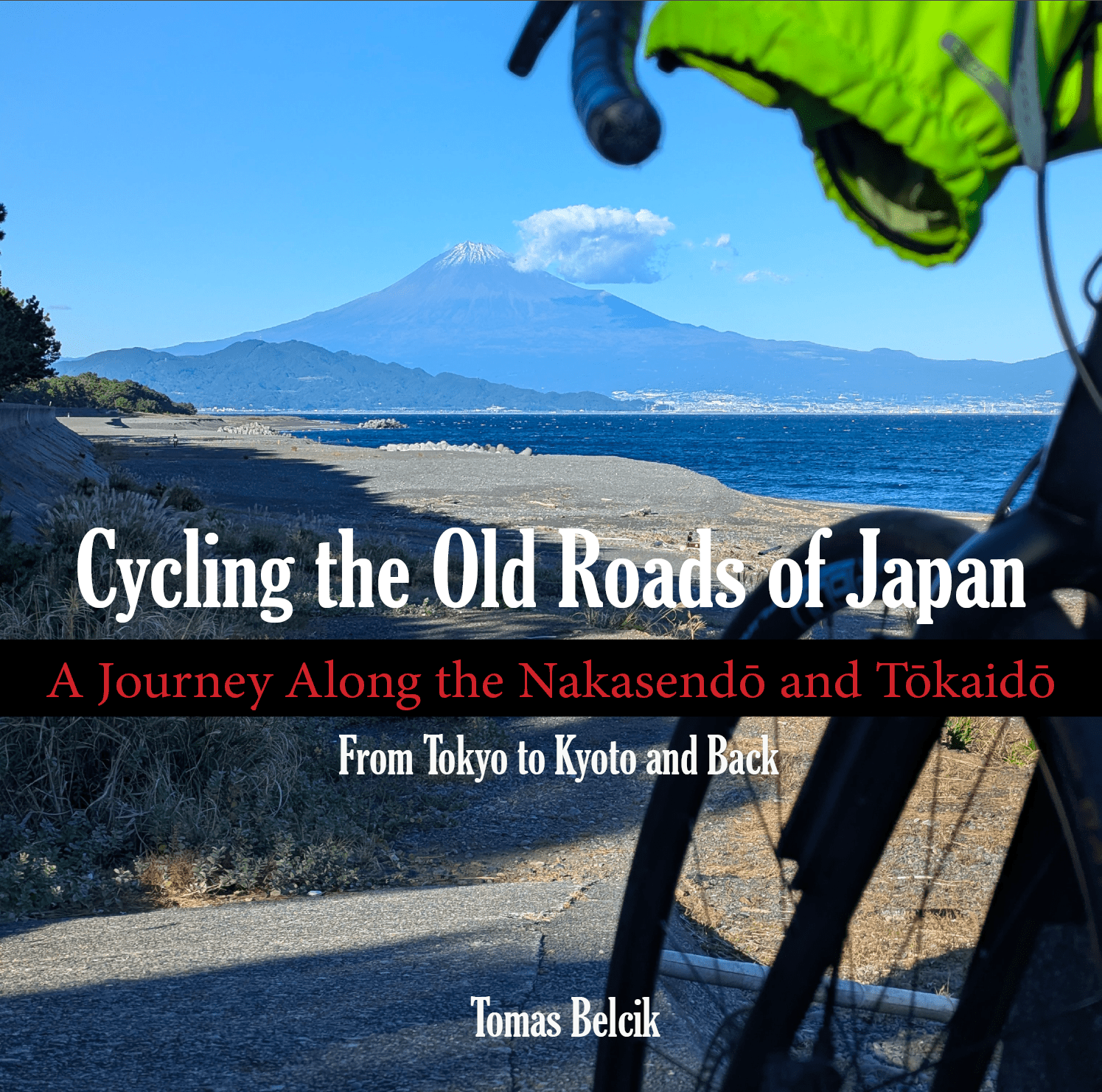
Cycling the Old Roads of Japan — From Tokyo to Kyoto and Back
Japan has long fascinated cyclists. Its reputation for safety, infrastructure, efficiency, and cultural depth makes it an alluring destination. Yet riding through Japan is rarely what first-time visitors imagine. The romantic image of quiet lanes, historic villages, and contemplative temples exists—but it exists alongside expressways, tunnels, dense urban sprawl, and relentless traffic.
That tension is exactly what drew me to cycle Japan again.
After earlier long tours around Kyushu and Hokkaido, I returned to Honshū to tackle a different idea: riding the country’s two great historic highways—the Nakasendō and the Tōkaidō—linking Tokyo and Kyoto, and then returning to Tokyo along a different corridor. What emerged was not just a route, but a lesson in how old roads survive (or don’t) in modern Japan.
The result is my newly published book, Cycling the Old Roads of Japan, now available in paperback.
Why the “Old Roads” Matter — and Why They’re Misunderstood
The Nakasendō once connected Edo (Tokyo) with Kyoto through the mountains, serving merchants, officials, and pilgrims. The Tōkaidō, by contrast, followed the Pacific coast and became the busiest artery of the Edo period. Both routes are often described as if they still exist in continuous, rideable form.
They don’t.
What remains today are fragments: preserved post towns, cedar-lined paths, stone markers, temple precincts, and place names embedded in modern development. Cycling these routes requires constant choice—when to detour, when to bypass, and when to accept that a highway or tunnel has replaced history entirely.
The book doesn’t attempt to reconstruct the past artificially. Instead, it documents what it’s actually like to ride these corridors today.
The Journey, in Brief
The journey unfolded as a loop:
- Tokyo — Several acclimatization rides inside the city to learn how to cycle safely in one of the world’s largest urban environments.
- Nakasendō — 12 cycling stages through the Japanese Alps, from the edge of Tokyo to Kyoto, navigating valleys, long climbs, rain, tunnels, and selective detours onto preserved walking sections.
- Kyoto and Nara — Ten days on foot and by bicycle, exploring temple districts and neighborhoods without trying to “see everything.”
- Tōkaidō — Eight stages returning east, following the modern coastal corridor, choosing continuity over nostalgia as time became more limited.
Throughout, I recorded daily tracks, noted practical realities, and reflected on what was worth lingering over—and what wasn’t.
Who This Book Is (and Isn’t) For
This is not a checklist guide. It won’t tell you to stop at every shrine or post town. Nor does it promise a traffic-free or idyllic ride.
Instead, it’s written for cyclists who:
- want a realistic understanding of riding in Japan,
- value context as much as scenery,
- appreciate candid discussion of weather, traffic, tunnels, and urban riding,
- and are comfortable making their own choices rather than following a rigid itinerary.
GPX files for each stage are included as optional references, not prescriptions. The book is structured, but flexible—meant to inform, not dictate.
Why I Wrote It
After decades of self-guided travel and more than forty published cycling guides, I’ve learned that the most useful information isn’t always the most romantic. It’s knowing what to expect, what to skip, and how to adapt when reality diverges from the plan.
Japan rewards that mindset. It is endlessly fascinating, deeply layered, and sometimes challenging in ways guidebooks gloss over. Cycling reveals all of it—good and bad—at the same human pace.
If you’re contemplating cycling in Japan, whether for a short section or a longer journey, I hope this book helps you decide not just where to go, but how to go.
👉 Cycling the Old Roads of Japan: A Journey Along the Nakasendō and Tōkaidō, From Tokyo to Kyoto and Back is now available in PDF.